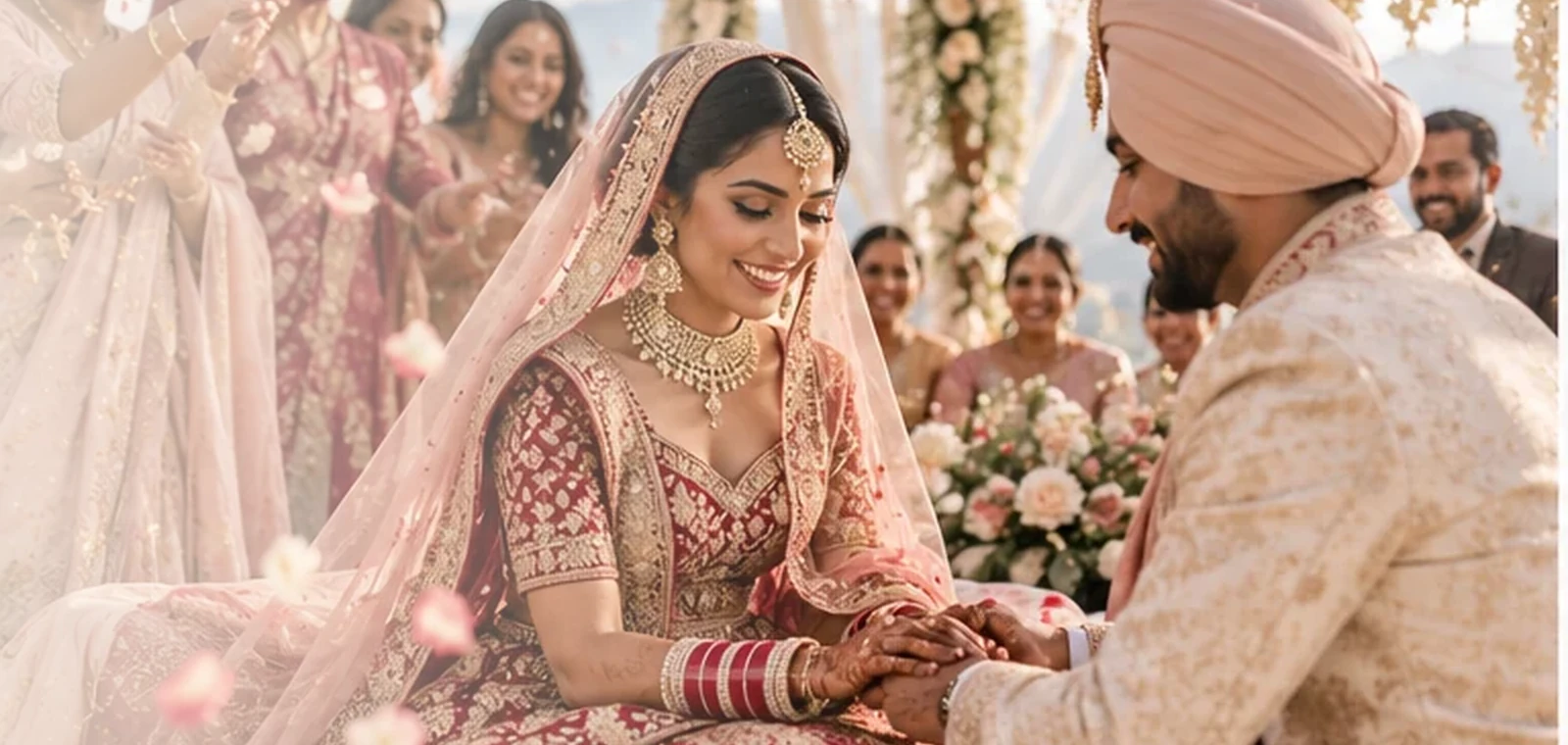
Map every event before booking the details
A Punjabi wedding may include engagement or family gatherings, Maiyan, Jaggo, Sangeet, a religious or civil ceremony, and a reception. Not every family follows the same sequence. The planning goal is to understand your own sequence first.
Create one master calendar showing the start time, location, expected guest count, clothing, food, photography, décor and transportation for every event. That one document becomes the source of truth for the family and vendors.
- Give every event its own guest count
- Track outfits and jewellery by event
- Assign one family coordinator per household or venue
- Keep travel and clothing changes visible on the timeline
- Confirm which traditions your families actually want to include
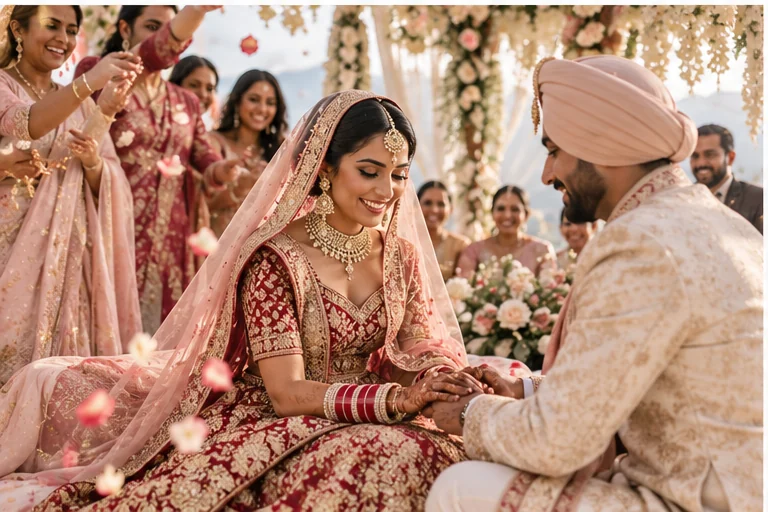
Build the week around the celebrations your families are actually having
Pre-wedding family events
List each event separately so catering, décor and guest counts are never assumed to be the same.
Maiyan / ceremonial gatherings
Protect preparation time and make sure photo/video teams know which family moments matter.
Jaggo & Sangeet
Entertainment-heavy evenings need their own sound, arrival, food and end-time plans.
Wedding ceremony
Plan family arrivals and ceremony timing separately from the reception.
Reception
This may be the largest guest count of the week and deserves its own seating, catering and transportation plan.
Post-wedding family time
If your families observe additional traditions, leave real space for them instead of squeezing them between vendor schedules.

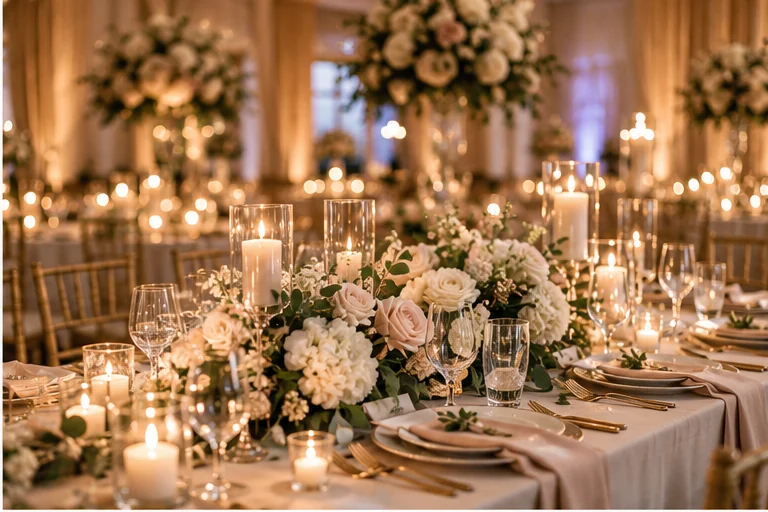
Price the wedding event by event
A single total can hide where the money is actually going. Build a budget line for each event, then roll those numbers into the full wedding cost.
Catering
Use the guest count for that event, not the reception count by default.
Clothing
Track every outfit plus alterations, jewellery, shoes and changeover needs.
Décor
Reuse only where timing and transport make it realistic.
Photo & video
Confirm exactly which events and hours are included.
Transportation
Family homes, ceremony, hotel, photo locations and reception may all require separate movement.
Contingency
Multi-day weddings create more places for overtime, delivery or last-minute costs to appear.
Give the couple fewer jobs on the wedding week
Large weddings become calmer when responsibilities are named in advance. Assign people to family arrivals, vendor questions, clothing or jewellery, elderly guests, transportation and the final item check before leaving each venue.
Family captain
One person per side who can answer routine questions without calling the couple.
Guest transport lead
Tracks elders, children and anyone who needs a planned ride.
Personal-items lead
Keeps jewellery, shoes, outfits and emergency items moving to the right location.
Vendor contact
Knows the approved timeline and can handle ordinary access or setup questions.
Where Punjabi wedding timelines usually need more margin
Hair and makeup
Large family groups and multiple looks need more time than the couple’s appointment alone.
Photo transitions
Family combinations can expand quickly. Give the photographer a priority list.
Travel
Do not hide driving time inside a clothing-change or photo block.
Reception arrivals
Large guest counts need staffed entrances, parking and a realistic dinner start.
Late-night departure
Pre-plan transportation for anyone who should not be finding a ride after the celebration.
Questions worth deciding as a family
Should every event have the same guest list?
No. Event-specific guest counts make catering, venue capacity and budgets much easier to manage.
How early should we make the master schedule?
As soon as the event sequence and venues are known. It can stay flexible, but the family needs one shared version long before the final week.
What is the biggest benefit of planning transportation early?
It reduces late arrivals and keeps elders, children and key family members from becoming last-minute responsibilities for the couple.